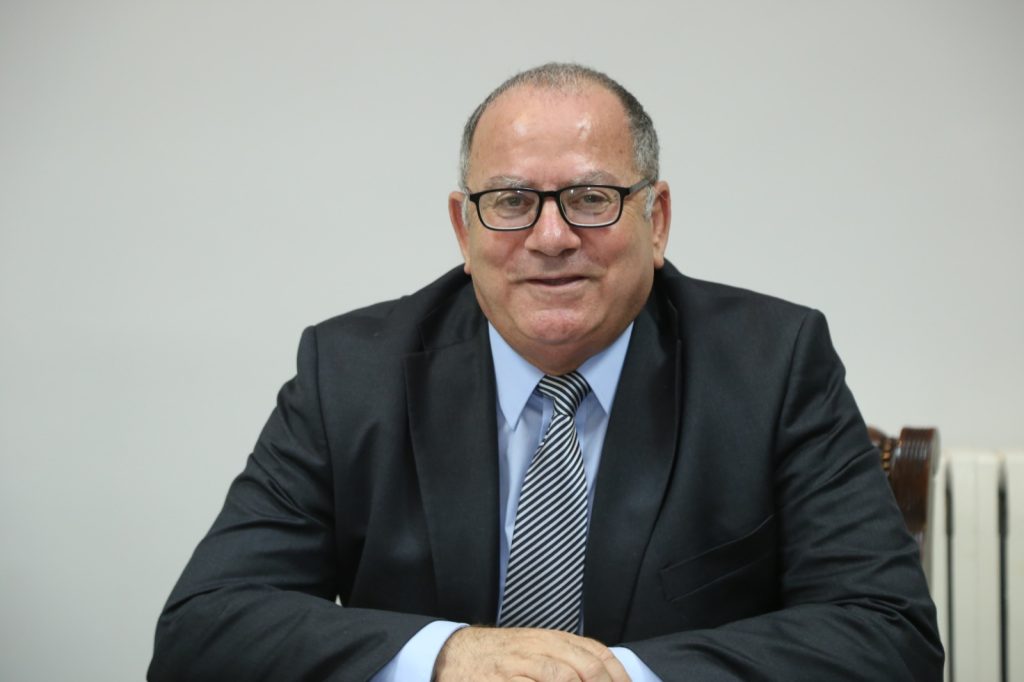
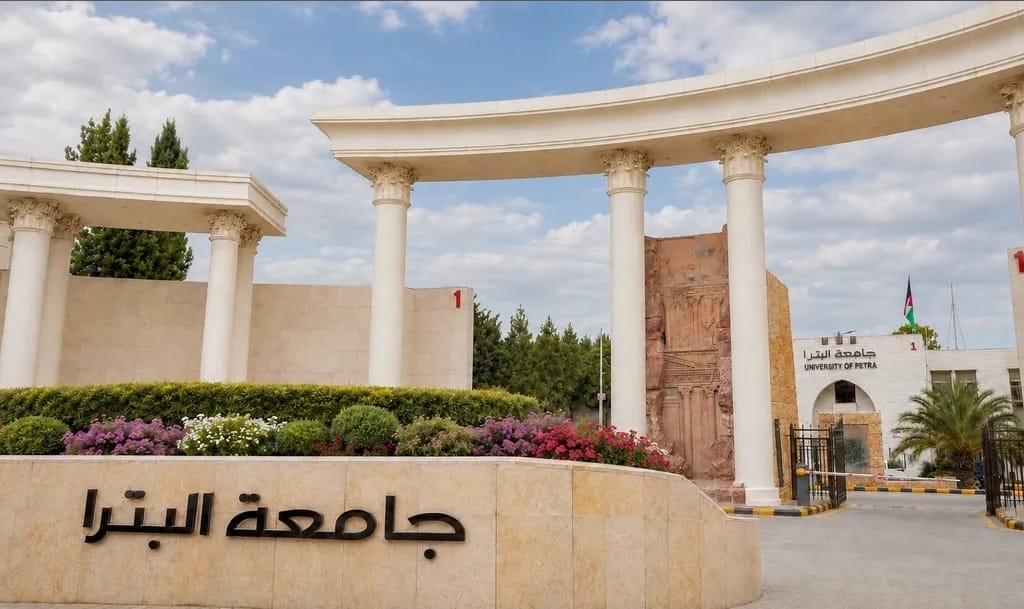
There is a thread that, more than borders and geopolitical crises, continues to bind the two shores of the Mediterranean together: culture. It is within this space, suspended between history and the future, that Ali Abughanimeh’s new challenge takes shape. An architect, academic and now Rector of Petra University in Amman, Jordan, he has been appointed to lead one of the country’s most important universities at a particularly delicate time for the Middle East. Abughanimeh is no stranger to Italy. He studied at Sapienza University of Rome and, over the years, has developed an extensive network of relationships within the Italian academic and professional world, maintaining an ongoing dialogue with institutions, architects and scholars. His professional path has already crossed that of Nuove Cronache, which hosted him on the occasion of the presentation of important volumes devoted to Mediterranean architecture and, subsequently, as a member of the jury for the Arab Architects Awards, an event that brought architects, university professors and institutional representatives from across the Arab world to the Egyptian capital. These were different occasions, but they were united by the same idea: architecture and culture can become instruments of dialogue where politics often encounters borders, mistrust and confrontation. It is perhaps precisely this experience that makes his new role particularly significant. Abuganimeh takes the helm of Petra University with the vision of an open and international institution, capable of looking beyond its own borders and transforming academic cooperation into a concrete instrument for growth. The Mediterranean and Europe—and Italy in particular—will play a central role in his vision. Sapienza University and other institutions with which he intends to strengthen partnerships, exchanges, scholarships, research programmes and master’s degrees will be key to this strategy. Above all, however, he is convinced that a university should not be a closed citadel, but rather a place where students and professors can engage with the wider world, exchange ideas and measure themselves against different perspectives. As an architect, Abuganimeh appears to be applying to the university the same principle that lies at the heart of his discipline: to build, connect and create spaces for encounter. And in a Mediterranean region marked by conflicts and new divisions, that is no small metaphor. Just a short distance from the major issues shaping the Middle East, the new Rector of Petra University has chosen to speak about the future. And he does so by starting from what has always built bridges stronger than walls: culture, knowledge and the ability to meet and engage with one another.
Professor Abughanimeh, your recent prestigious appointment as Rector of Petra University comes at a crucial moment for the Middle East. What will be your “architecture” for the university during your four-year term?
We are living through a crucial moment for the Middle East, but I continue to believe in the possibility of a future of greater peace and stability for all our countries. I am convinced that the future can always be better. For Petra University, my first priority will be to guarantee the quality of education, the seriousness of our academic activities and the presence of the best professors. At the same time, I want to strengthen international relations with leading universities around the world, working in particular with the countries of the Mediterranean, European countries and other international academic institutions. I would like to bring activities, initiatives and opportunities for exchange from these countries into our university, creating a space where professors and students can meet, exchange views, present their ideas and engage in dialogue with colleagues from other universities. I believe these are the foundations upon which to build the four-year path of my term as Rector of Petra University.
Your academic background is inextricably linked to Sapienza University of Rome and to your many contacts with Italian academics. What do you bring from the Italian approach to the management of a Jordanian university?
I graduated from Sapienza University of Rome, one of Europe’s most important universities, and that experience is certainly an important reference point for my role as Rector of Petra University. I have already had the opportunity to meet several rectors of Sapienza, and we have signed cooperation agreements. My objective is to continue and strengthen this relationship, extending it to other rectors as well and building increasingly solid ties between our university and Italian universities. I would like to deepen the existing links with universities such as Palermo, Catania and Enna in Sicily, as well as with Pescara, Brescia and Salerno, and with the universities of Naples, from Federico II to the University of Naples II. I am convinced that closer cooperation with these universities can create major opportunities for both academic communities. I greatly appreciate the seriousness and quality of the Italian university system, and I would like our cooperation to go beyond workshops. We can develop scholarships and exchange programmes, host Italian professors for periods of research or teaching, work together on master’s programmes and promote other initiatives capable of building stable and meaningful academic cooperation. The Italian Embassy in Amman has always shown its willingness to support this type of initiative. For this reason, we want to make full use of all the opportunities available to further strengthen academic relations between Petra University and Italian universities.
You chair the Mediterranean Architects Forum. In a world that seems increasingly inclined to build walls, will internationalisation be a central focus of your mandate?
Certainly. My role as President of the Mediterranean Architects Forum offers me an important opportunity to strengthen relations not only within the Faculty of Architecture and Design at Petra University, but also through the contribution of Italian architects. Italian architecture possesses great richness and a particular sensitivity in the management of the environment, territory and culture. These are aspects that are also deeply rooted in Mediterranean culture and can therefore become common ground for cooperation. There are countless opportunities for cooperation among Mediterranean countries. I am thinking of Egypt, Lebanon, Syria, Palestine and many other countries with which we can develop useful and concrete relationships, while at the same time strengthening the international dimension of our university. I believe that managing these relationships effectively also means strengthening the role of education, academic integrity and culture throughout the Mediterranean. Culture can represent an element capable of bringing our countries together and, above all, contributing to peace. This is a fundamental issue if we want to create better conditions and enable our societies to live in greater peace and security.
Many academics in Italy complain about suffocating bureaucracy. Having experienced both worlds, what lesson do you intend to offer your Jordanian colleagues?
We are living in the third millennium, and we must be able to learn and continuously improve the way we run universities and conceive of academic activity. This means, first and foremost, reducing bureaucracy and making our systems more efficient. We must also improve our relationship with artificial intelligence and new technologies, understanding their potential and learning how to use them in the most beneficial way for the future. At the same time, we need to engage more closely with young people and our professors, creating a university capable of responding concretely to the needs of society. Our students must learn to become influential and responsible members of their communities, people capable of contributing to the development and improvement of their societies. The direction, therefore, must be toward less bureaucracy, more intelligence, more dialogue and more exchange of ideas. We need to discuss and understand how to use artificial intelligence and all modern technologies, selecting what can truly be useful for our future. Universities must be closer to young people and to the society in which we live, without allowing themselves to be overwhelmed by the speed of technological change. We must know about these transformations, understand them and, above all, choose what is best for us and for our society. In my view, this is the most important challenge for Petra University: to be closer to society, closer to students and closer to the speed at which technology and artificial intelligence are evolving today. We must learn to govern this change, rather than simply endure it.
Thank you.
by Giuseppe Di Giacomo
The editorial staff of Nuove Cronache would like to thank Professor Francesca Mancini for her collaboration and for making this special interview available in English and Arabic.